Turning on the Water Taps for Half a Million People in Mozambique’s Capital


Maputo’s water crisis
In the mid-2010s, nearly three million people living in the Greater Maputo Area–Mozambique’s largest urban center which comprises the two most populated cities in the country, Maputo and Matola–struggled to access clean, piped water. Rapid urban expansion and decades of lack of repairs and investments in the water system led to a severe water crisis. There was not enough water to treat and supply to all residents, especially in the districts of Boane and Marracuene. The city’s water supply system came from a single surface water source, the Pequenos Libombos Dam, built across the Umbeluzi River, 25 kilometers south of Maputo. The only operating water treatment plant was overloaded and highly exposed to climatic shocks such as tropical cyclones. Yearly flooding during the rainy season also affected the distribution systems and water quality.
“Our neighborhood did not receive enough water,” said Mateus Augusto, Rosa’s neighbor. “Women and girls walking long distances with heavy water buckets on their heads was a common sight around here.”
To increase the quantity of clean water for residents, the Government of Mozambique, with support from the World Bank’s National Water Resources Development Project, rehabilitated a second source of surface water, the Corumana Dam, located on the banks of the Sabié River. Initially built for irrigation, the dam is now also used to supply water and protect communities from floods. New spillway gates installed through the project increased the dam’s water storage capacity by over 30%.
Later, through the Greater Maputo Water Supply Expansion Project, also supported by the World Bank, the Mozambique Water Asset Holder and Investment Fund (FIPAG) brought the water captured by the Corumana Dam to people’s homes. Thanks to new infrastructures, over half a million people who live in underserved, peri-urban areas, like Rosa, gained access to clean water through a tap in their homes.
The project helped to build:
- A new water treatment plant in Sabié, that increased the city’s production capacity of treated water by one-third;
- A 95 km pipeline to bring the treated water from Sabié Water Treatment Plant to Maputo;
- Seven offtakes to supply water to communities and industries located along the pipeline;
- 100,000 new household connections in the Greater Maputo Area.
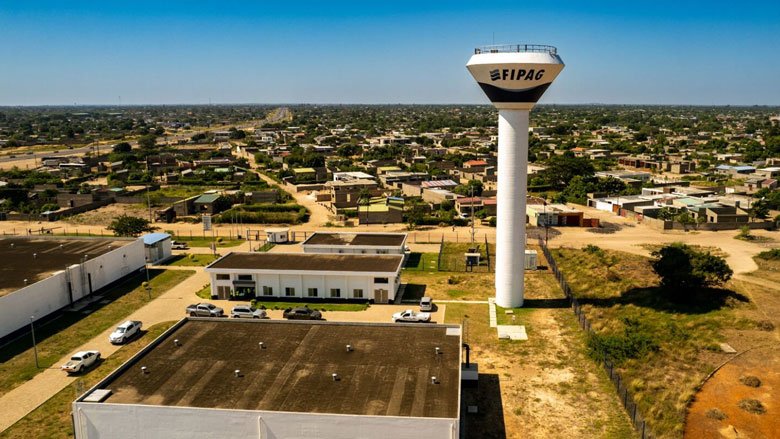
“When we started the project in 2015, we provided water to around 800,000 people. Today, we increased the distribution to 1.7 million people and expanded the network to several neighborhoods previously without water access,” says Victor Tauacale, FIPAG Director.
Watering the seeds of economic growth
Having water at home opened economic opportunities for Rosa’s family. Her husband and she now build and sell concrete blocks from their backyard; the steady water supply allows their small business to run smoothly. “It has become our family’s main income source,” says Rosa.
These investments also had a ripple effect on the country’s economy, since Greater Maputo is the country’s industrial hub. “This project greatly impacted the country’s economy; many industrial hubs and businesses now benefit from the steady, clean water supply,” says the FIPAG Director.
“Now, I have water in my home. I cook, wash, and drink clean water. I am happy!” says Rosa. It is as easy as turning the tap on.
Crédito: Link de origem

- Advertisement -

Comentários estão fechados.