
Health on the frontlines: caring for Haiti’s displaced population – PAHO/WHO


Port-au-Prince, 22 April 2024 (PAHO/WHO) – Since February 29, 2024, Haiti faces an intensified security crisis, marking a new stage in the violence already impacting a struggling healthcare system, and further complicating access to care for millions of Haitians. As is often the case, the crisis has hit the country’s most vulnerable the hardest, including those living in one of the 84 Internally Displaced Persons (IDP) sites of the metropolitan area of Port-au-Prince, home to around 86,040 people.
Over the past month, PAHO/WHO has been able to regain access to those living in 22 of the sites, where the organization has worked since 2022 to support local health authorities.
The human cost of violence
At 67, Marie Yliane, a former street seller, lives in the Colbert Lochard site for displaced persons, a public school that is now home to almost 2500 people. Originally from the Carrefour-Feuilles neighborhood, she, like many of her neighbors, had to flee last August in the face of the advance of a local gang:
“I never had high blood pressure before the current crisis. But the sounds of gunfire echo in my head. You’re always forced to flee without knowing where to go,” she said.
Marie is a patient at the mobile clinic set up by the Ouest Department’s health authorities with the support of PAHO/WHO and other partners.
“The mobile clinic helped me a lot today,” she added. I was feeling unwell and as almost all the hospitals are closed, a friend advised me to go. The doctors discovered that my symptoms: insomnia, headaches, fatigue are due to high blood pressure. I received medication and thanked God for this care in these chaotic times”, she added.

From wounds of war to wounds of the soul
“Before the crisis, I had a store and a motorcycle. But I lost everything when I got shot in the foot by a stray bullet”, explained John, 34, also from Carrefour-Feuille. “Bandits invaded my neighborhood and I was hit by the bullet while trying to escape”.
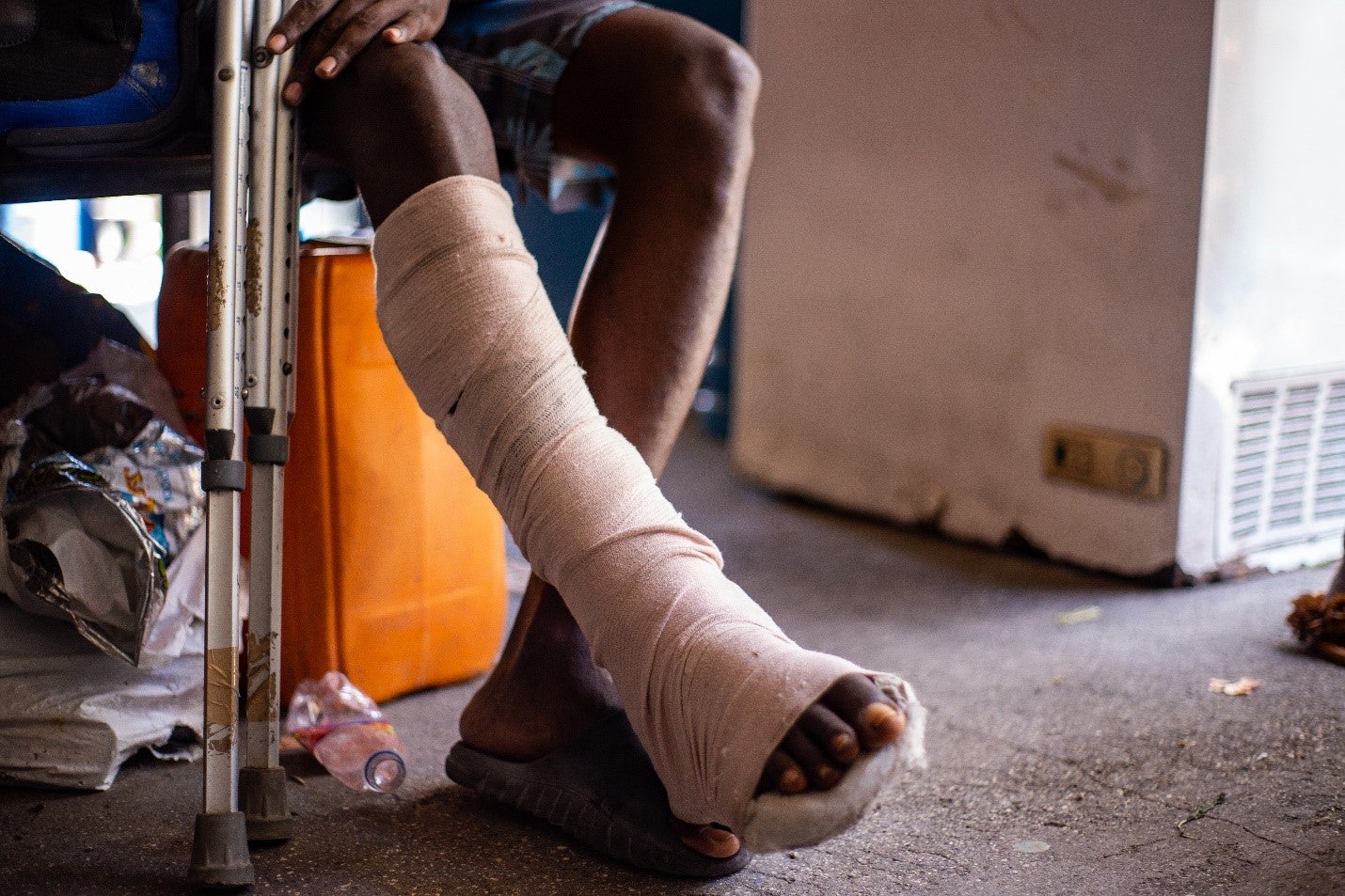
After having exhausted his savings on hospital bills following his injury, John visited the mobile clinic for a free consultation and treatment.
Sabrina visited the clinic due to concern about the mental health of her two young children. The 28-year-old mother traveled from a nearby IDPs site for a consultation. “One of my children is traumatized by the sound of automatic weapons and can’t stand them. I have to protect him and take him to safety when there is a shooting”, she explained.
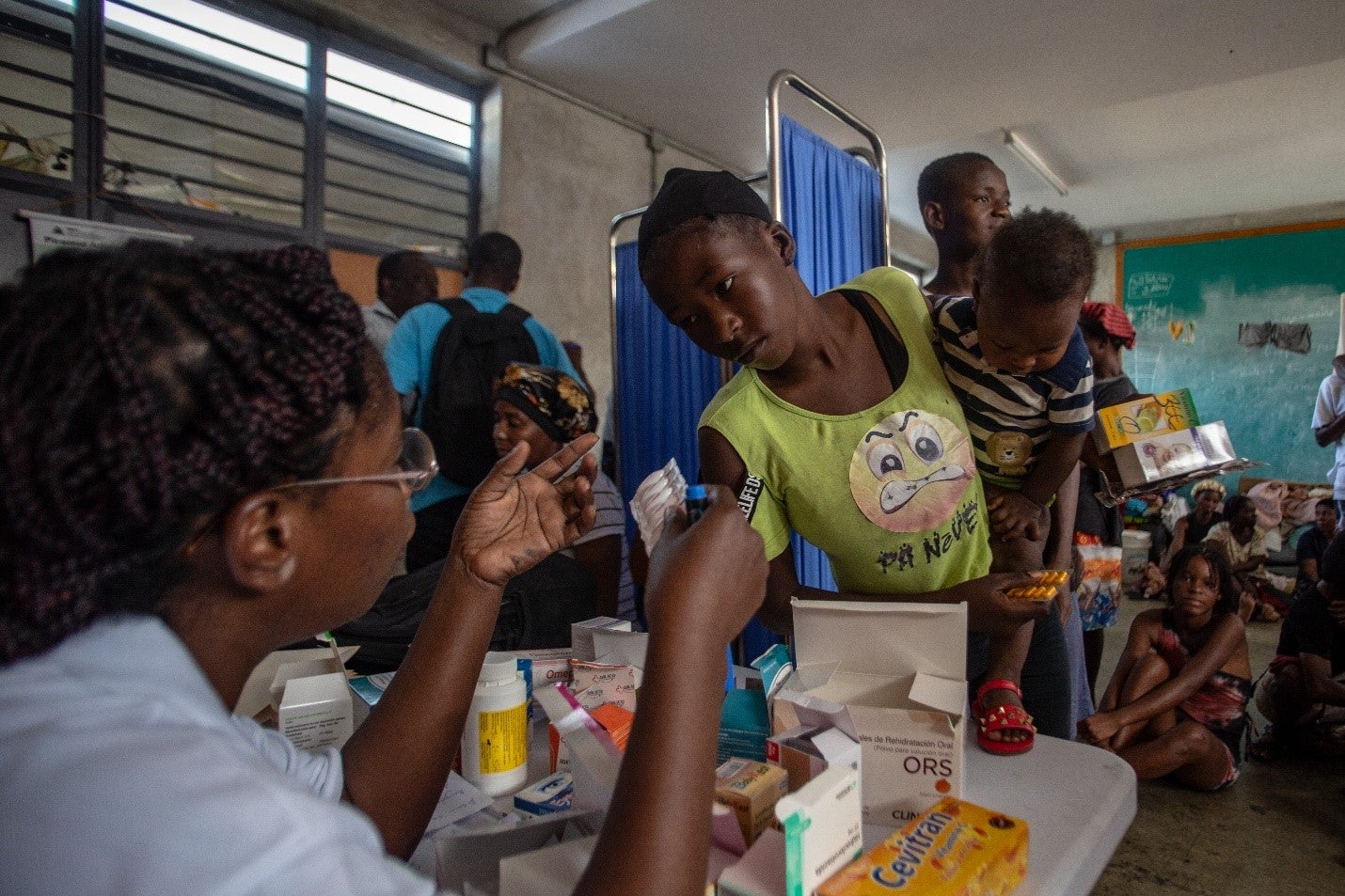
Reactivated since mid-March, the mobile clinics have already carried out more than 1000 health consultations in several sites in the Port-au-Prince metropolitan area.
They are crucial in facilitating access to health care for displaced populations.
Staffed by 6 doctors, 10 auxiliary nurses, 2 midwives, 3 psychologists and a dozen psychosocial and community health workers, the mobile clinics provide general medicine services, as well as sexual and reproductive health, and psychosocial consultations. Community health workers also utilize the clinics to organize awareness raising activities. PAHO/WHO supports the initiative through the provision of logistical and technical support, as well as through the supply of medical products.
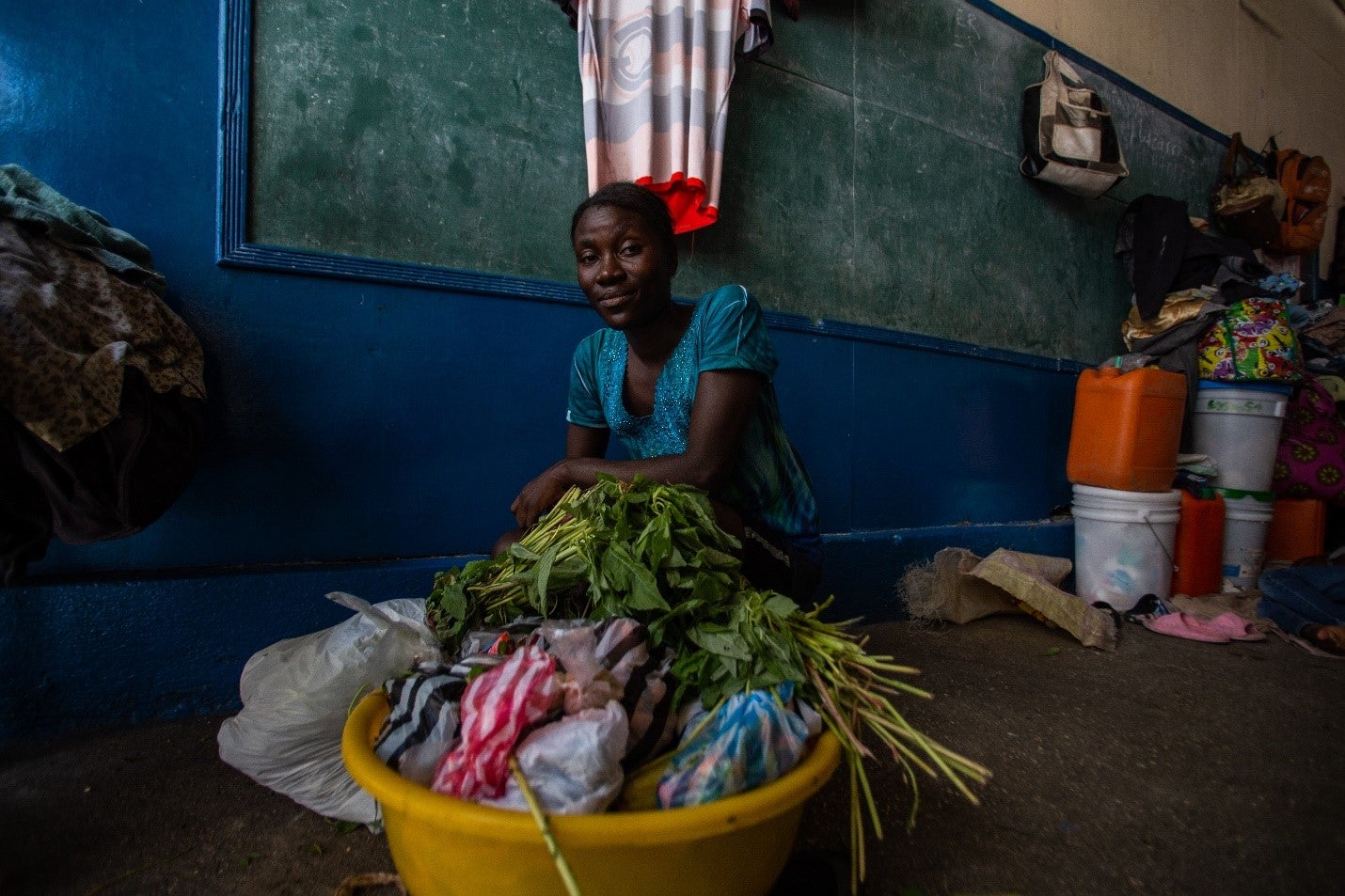
Health care in overcrowded conditions
“As soon as we were able to return to the sites, our priority was to distribute hygiene and sanitation products to people who had not received assistance for several days”, Dr. Jean-Gilbert Ndong, coordinator of the PAHO/WHO response in IDP sites, explained.
Overcrowded and housed in unsuitable structures, the IDP sites face considerable challenges, including a lack of access to drinking water and sanitation. These conditions create a breeding ground for the deterioration of residents’ health and the potential development of epidemics.
In addition to the mobile clinics, surveillance activities have also been relaunched thanks to the work of surveillance and response teams deployed to each camp. The aim of this surveillance is to prevent the outbreak of diseases such as cholera, which has reappeared in the country since October 2022.
PAHO’s response alongside health authorities
In addition to its support to the health authorities of the Ouest Department for displaced populations, PAHO/WHO has supported the Ministry of Public Health and Population (MSPP) since the beginning of the crisis through logistical support to public hospitals and other institutions that continue to provide health care in a complicated security environment. PAHO/WHO has also provided several tons of medical supplies to various facilities, including the Hôpital Universitaire la Paix and the Médecins Sans Frontières hospital, which treat most of seriously injured patients.
PAHO has also assisted the National Blood Transfusion Program through the donation of supplies and reagents, and the National Ambulance Center to ensure the continuity of ambulance care and the transport of injured people, through the supply of fuel.
PAHO/WHO is also supporting three public hospitals in the field of maternal health, primarily by increasing access by reducing the financial barriers to caesarean deliveries for women requiring this procedure.
Crédito: Link de origem

- Advertisement -

Comentários estão fechados.