
Four years after dam’s collapse, Lake Dunlap is back in business

LAKE DUNLAP — It’s been nearly a century since the turbines and generator were installed at Lake Dunlap, which is along the Guadalupe River south of New Braunfels.
But the 1920s power plant is still operational — and after more than four years of sitting dormant, the turbines are turning again.
After a dam collapse in May 2019 drained the lake, leaving just the natural flow of the Guadalupe River through the exposed lakebed, the dam has been rebuilt, with work largely completed this summer.
In late August, the new dam gates were raised and the 400-acre lake began slowly refilling. It officially reached full capacity just under two months later.
Then came another milestone: The Guadalupe-Blanco River Authority, which owns and operates the lake, announced on Nov. 2 that hydroelectric operations were resuming.
The resumption of power generation marks the culmination of a years-long effort to refill the lake, and the completion of the first of three projects to rebuild century-old dams on the Guadalupe.
HILL COUNTRY HEADLINES: Top stories from the booming region
Taxing themselves
It was May 14, 2019, when J. Harmon, president of the Preserve Lake Dunlap Association, got a call from a Guadalupe-Blanco River Authority executive. When he was told a gate on the dam had failed, his first thought was that a gate on the 90-year-old dam, was just stuck. “He said ‘No, it’s just gone,’” Harmon recalled.
This is a carousel. Use Next and Previous buttons to navigate
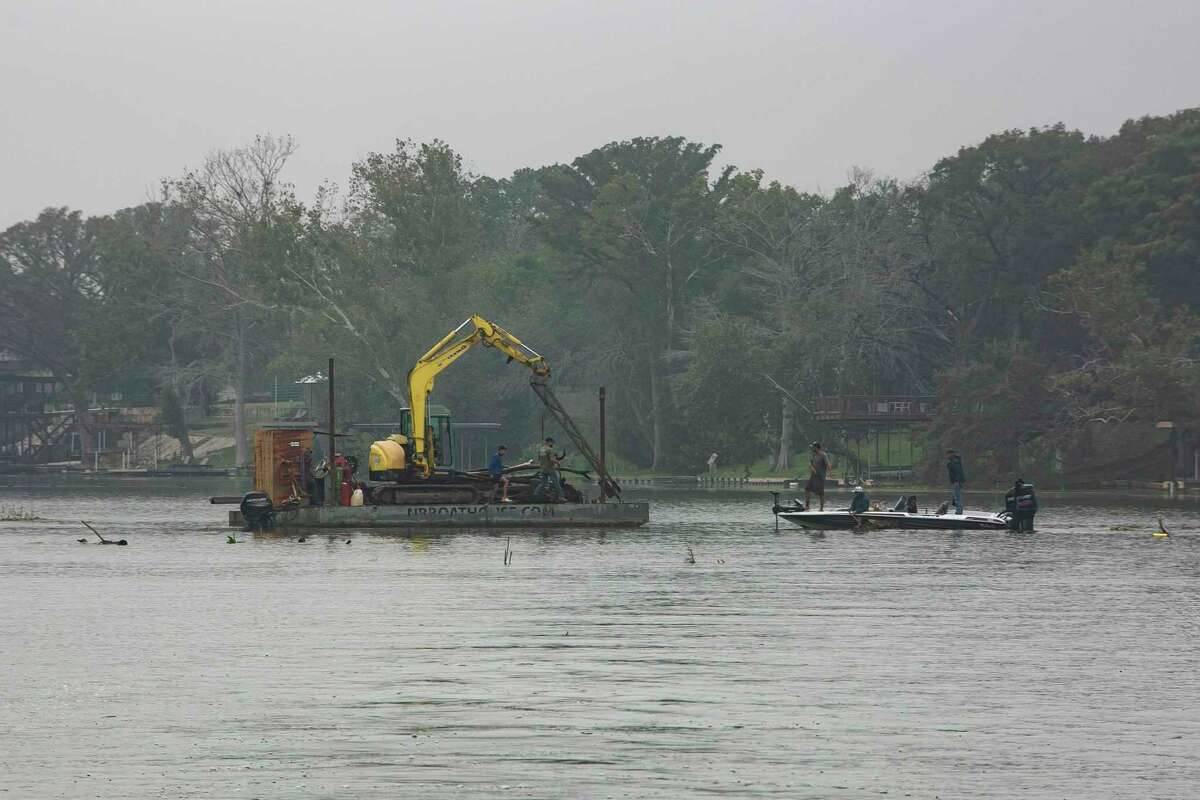
NB Boat House employee Chris Cambron, right, helps lake resident Todd Talkington, left, lift a large stump onto his barge to clear away at Lake Dunlap on Saturday, Nov. 4, 2023 in New Braunfels. Two months after refilling began at Lake Dunlap, the lake is now full and power generation is resuming. Residents have been pulling lots of logs and debris out of the lake now that it’s full, and they had a lake cleanup Saturday morning with boats and a barge to clear large debris. Members of NB Boat House, a local dock building company, and Lakefront Group, a local real estate company, organized the cleanup.
Salgu Wissmath/San Antonio Express-News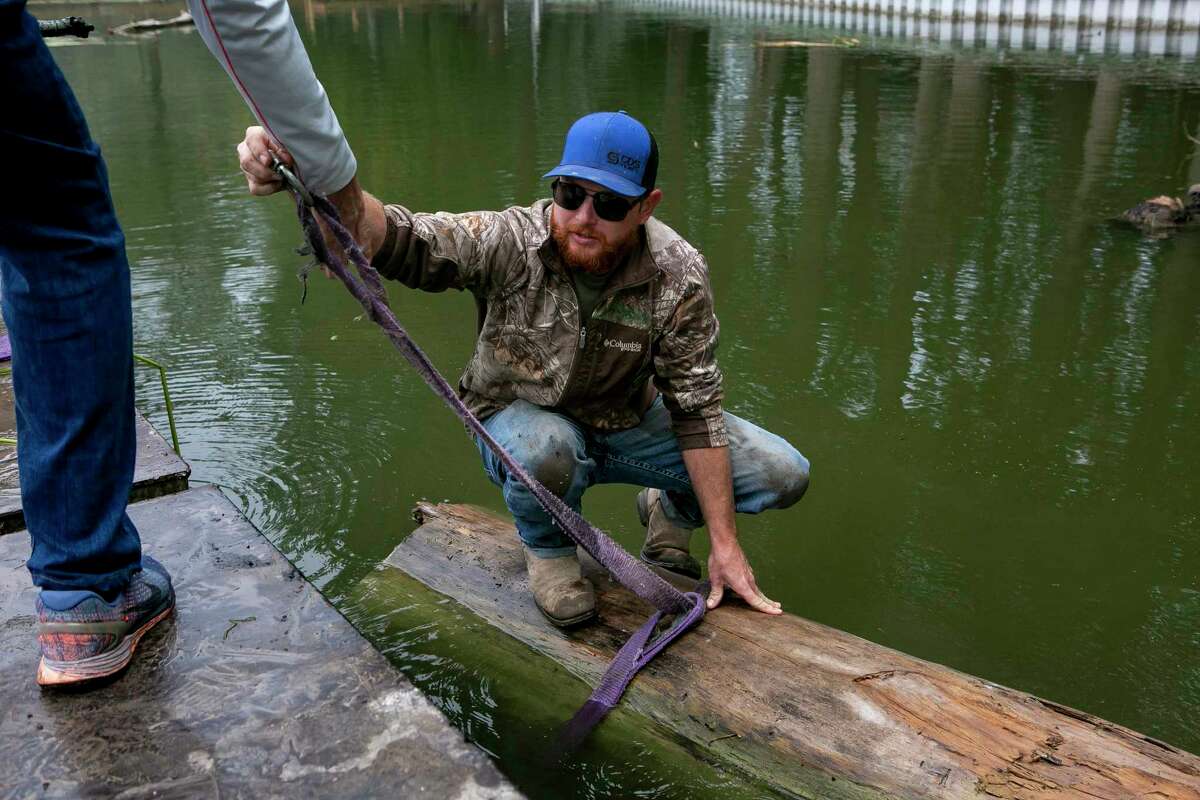
Within hours, the lake was almost entirely drained, as water flowed freely over the dam down the Guadalupe River toward Lake McQueeney and Lake Placid. Stumps that had been deep underwater became visible. Boats were hanging in lifts, well above the mud below. Neighbors who had left for work that morning came home to find the lake had vanished. “It was kind of like a bad dream,” Harmon said.
In the weeks that followed, the river authority — which is commonly known as GBRA — said it would “dewater” the other lakes, too, citing concerns that the same failure that drained Dunlap would happen on the other aging dams, all built between 1928 and 1932. “Aging structural steel” was identified as the cause of the Dunlap dam’s failure. Another dam on the Guadalupe River, which formed Lake Wood, already had collapsed in 2016.
Repairing all six dams would cost about $180 million, GBRA officials said at the time. That was more than the river authority could come up with, officials say.
READ MORE: Lake McQueeney being drained this week for repairs to dam
Lake Dunlap residents, led by the Preserve Lake Dunlap Association, came up with an unusual solution: Taxing themselves to pay for the reconstruction of the dam. The nonprofit, formed by property owners in the 1970s, has worked to protect the lake since long before the dam collapse threatened it, and the group took a leading role in finding a solution for rebuilding the dam.
Residents who live on 400-plus properties bordering the lake were asked to form a water control and improvement district, which could collect taxes to pay for the project. In November 2020, they voted overwhelmingly to approve creating the Lake Dunlap Water Control and Improvement District.
The tax revenue will be used to pay back bonds issued through the Texas Water Development Board that funded construction of the new dam. The tax rate is currently set at 20 cents per $100 in property value. That equates to about $2,000 per year for a $1 million home, Harmon said. The benefit to property values from having a lake filled again more than makes up for that, he said.
GBRA also committed all gross revenue from power generation through the Lake Dunlap dam toward repaying the debt. The Guadalupe Valley Electric Cooperative, which serves about 3,500 square miles east and southeast of San Antonio, was also key to the agreement, approving contracts to purchase the power from Lake Dunlap for the next 30 years, or the term of the loan.
Charlie Hickman, GBRA’s executive manager of engineering, said the Guadalupe Valley Electric Cooperative has guaranteed a minimum annual payment of about $350,000. In years when there are “favorable river conditions,” when higher flow rates will allow for the generation of more power, the co-op will purchase more electricity, paying more toward the debt service.
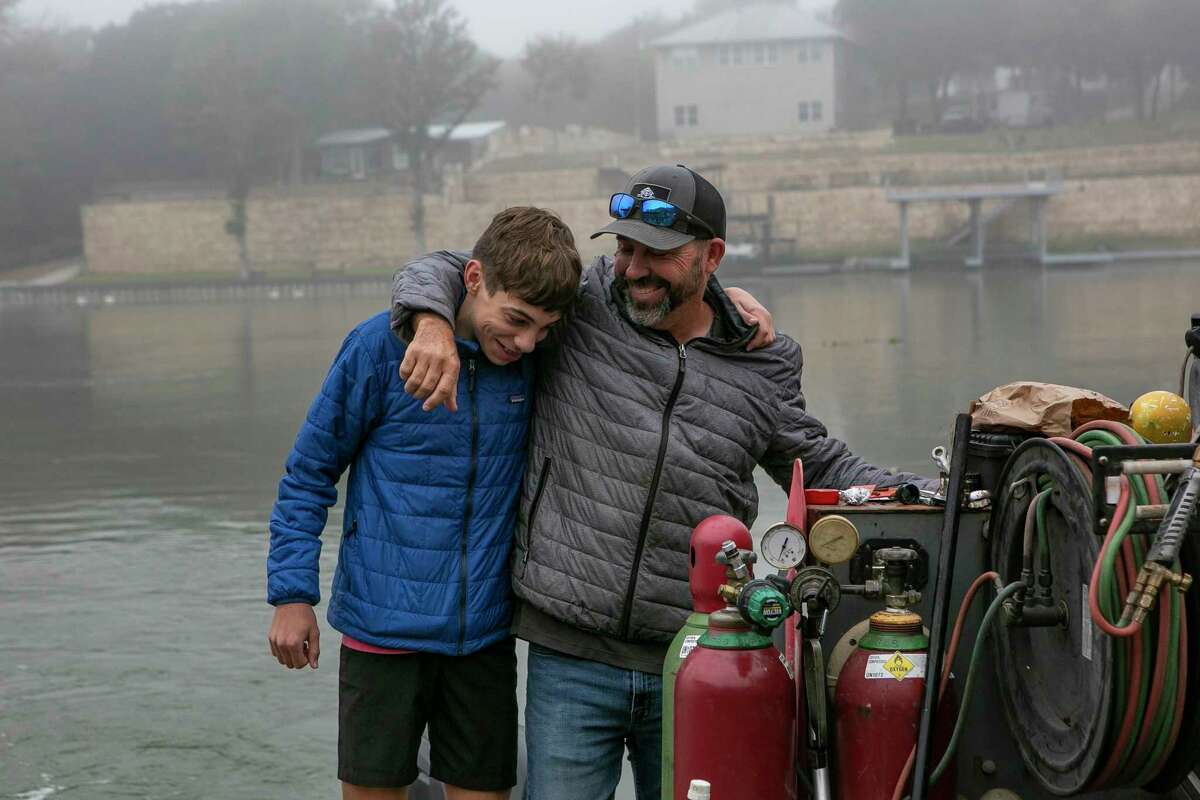
Chip Byrant, right, hugs his son Luke Bryant during a lake cleanup day on Lake Dunlap on Nov. 4. The lake has recently been refilled after a dam failure in 2019 caused it to drain.
Salgu Wissmath/San Antonio Express-NewsThe river authority also provided engineering for the dam, and its bond rating helped secure the zero-interest loan for the project, Harmon said.
After legal challenges, similar agreements were reached with residents on Lake McQueeney and Lake Placid; work on those dams began earlier this year and are expected to be completed in 2025.
READ MORE: River authority and property owners reach compromise on aging dams
‘We’ve got a lake again’
The power generation mechanism at Lake Dunlap is simple. The dam backs up water, creating pressure. The water is pushed into a canal that leads to a power plant; and when the turbines are activated, the force of the water turns the turbines, generating electricity. The turbines are turned off to allow the lake to refill again, then the cycle continues, with the lake level dropping a few inches during power generation, then rising again, then dropping.
The equipment at the power house is original, from the 1920s when the dam was built, Hickman sad. Maintenance has been done over the years to keep it operational, but the components providing power to Guadalupe Valley Electric Cooperative today are the same that were installed nearly a century ago. Knowledge of how to operate and care for the equipment has been passed down over the years from employee to employee, he said, to ensure it keeps running.
When the generators are running at full capacity, the plant can produce 2.4 megawatts of electricity, Hickman said. One megawatt can power about 200 homes on a hot Texas day.
On average, about 16 million kilowatt-hours are generated per year at Lake Dunlap, Hickman said. That’s enough energy to run a 1,000-kilowatt appliance for 16 million hours.
In drought conditions, the ability to generate power decreases. Right now, due to low flows on the Guadalupe, a spring-fed river that runs from Kerr County to the Gulf of Mexico, GBRA is only able to generate power a few hours per day, Hickman said.
READ MORE: Protecting the Trinity: Why the San Antonio area’s other aquifer is so important
But Harmon, vice president of the Lake Dunlap Water Control and Improvement District board, says he hopes that in better years, the electricity will bring in much more revenue, potentially even enough to eventually lower the district’s tax rate. Records from before the collapse showed Lake Dunlap’s dam was bringing in $900,000 per year, he said, even though all the GBRA dams combined were operating at a loss.
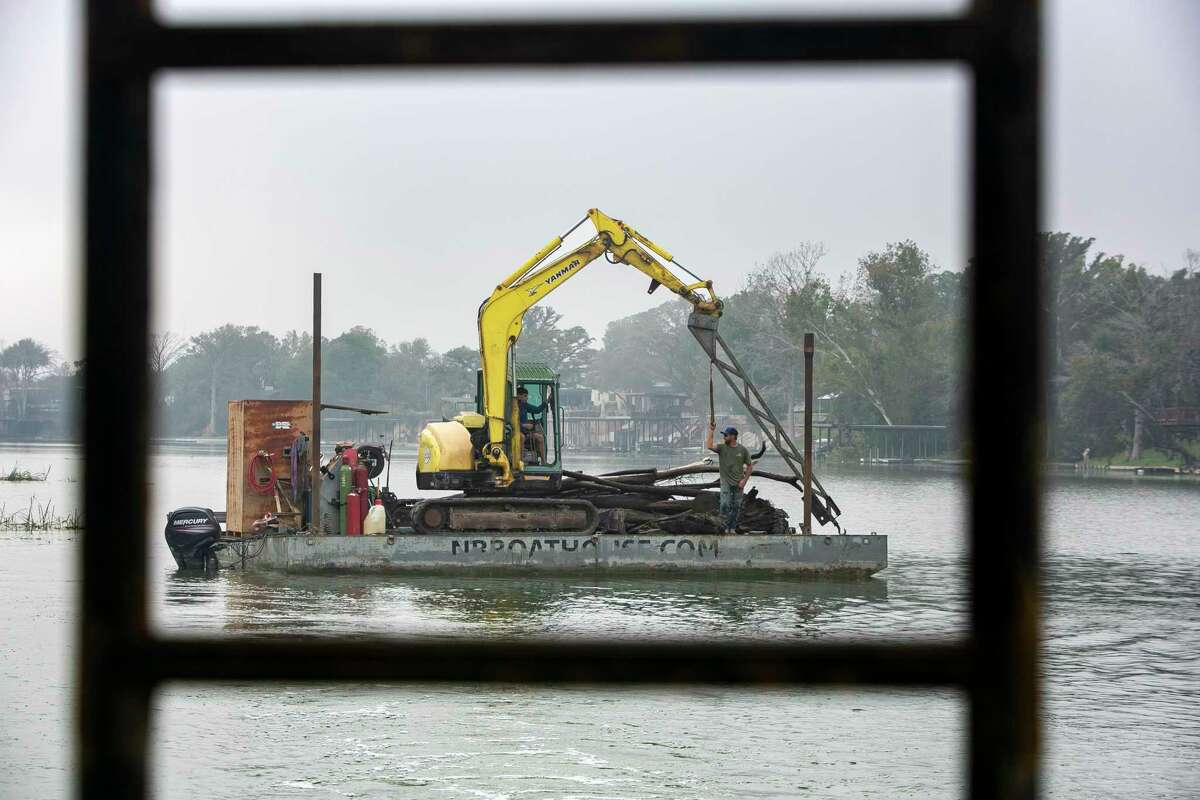
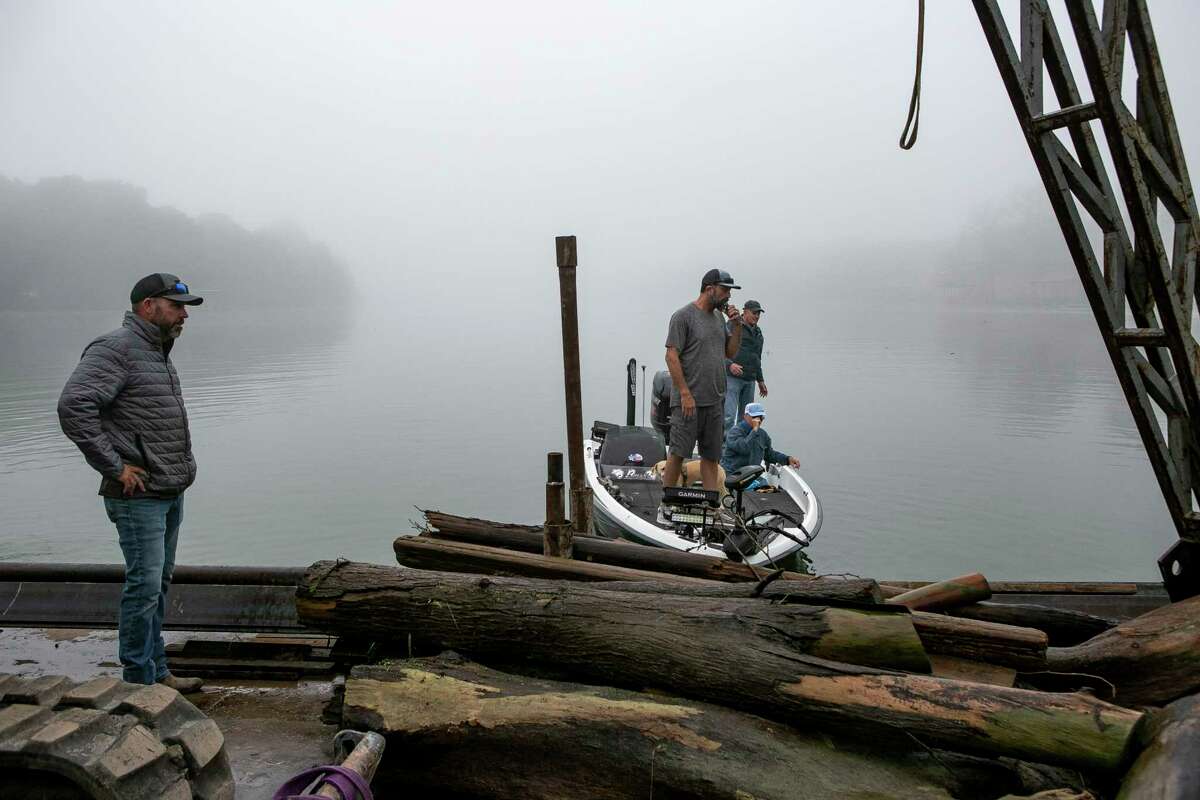
A pile of logs sit atop Chip Bryant’s barge during a lake cleanup day on Lake Dunlap on Nov. 4. The logs and other debris were pulled from the lake, which has been refilled recently after a dam failure in 2019 caused it to drain.
Salgu Wissmath/San Antonio Express-NewsThe new dam benefits everyone, Harmon said. Residents have their lake back, and they have a stronger, better dam. The new steel gates can be raised and lowered in smaller increments, allowing for greater control of the water level, especially in flood conditions. And the new dam has stoplogs, barriers that can be used to block of water flow to parts of the dam to allow for repairs or routine maintenance.
“My kids and grandkids won’t ever go through this,” he said.
Cleanup underway
In the years the lake sat empty, “it was a jungle out there,” Harmon said, with vegetation and trees sprouting up in the lakebed. Before refilling began, the Preserve Lake Dunlap Association paid $75,000 for a tree service to come clean it up. The service cleared off and hauled away a large portion of the debris, Harmon said. But despite returning multiple times, they weren’t able to entirely clear the 8-mile stretch, and now residents and local businesses are working to remove what’s left.
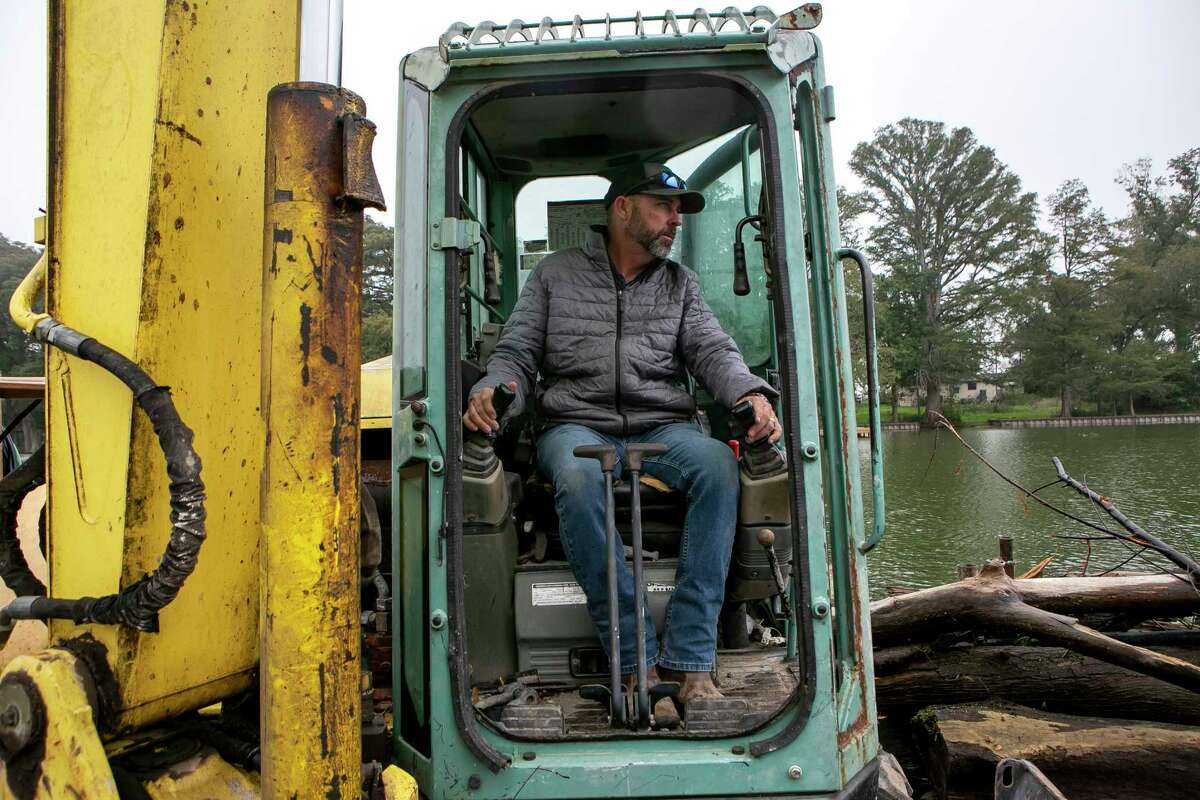
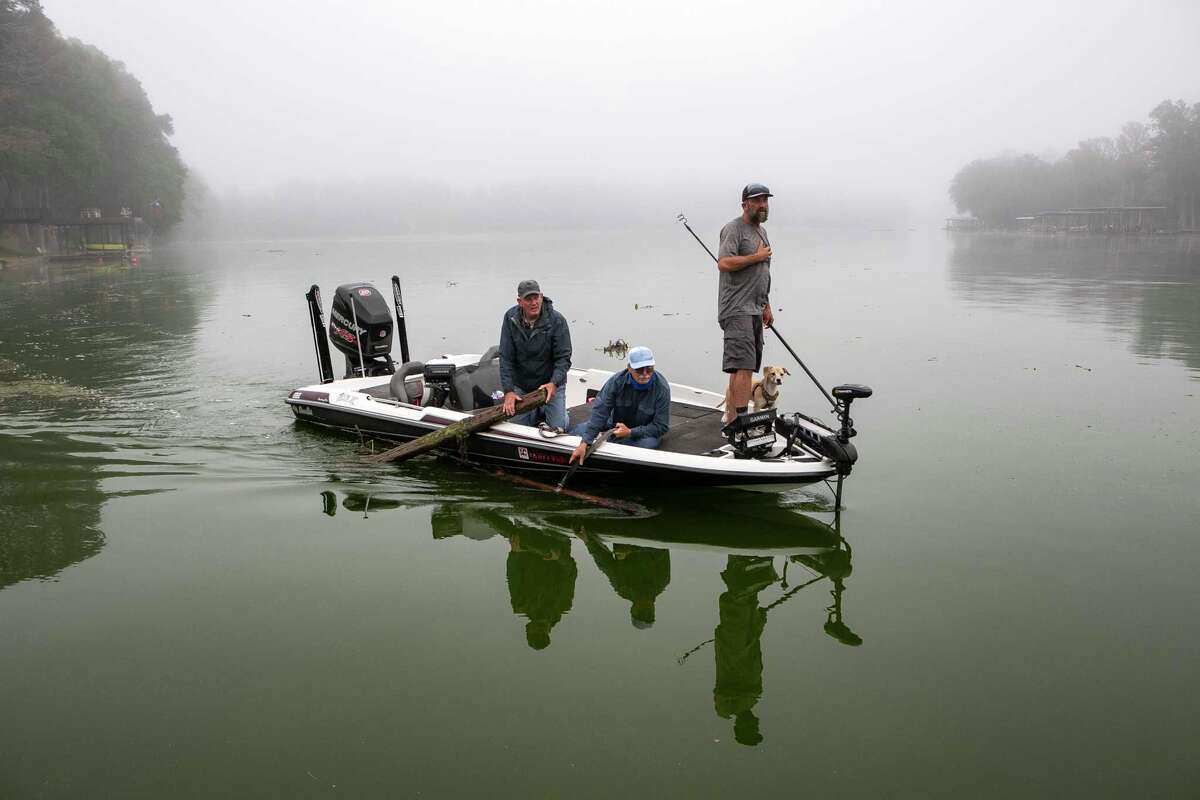
Chip Bryant, owner of dock-building company NB Boathouse, was navigating his barge around the lake on a recent weekend morning, along with his son, Luke, employee Chris Cambron and Hagan Cohle of the Lakefront Group real estate agency. The Lakefront Group and Bryant organized the cleanup, asking residents to come help pick up hazards lurking in the lake.
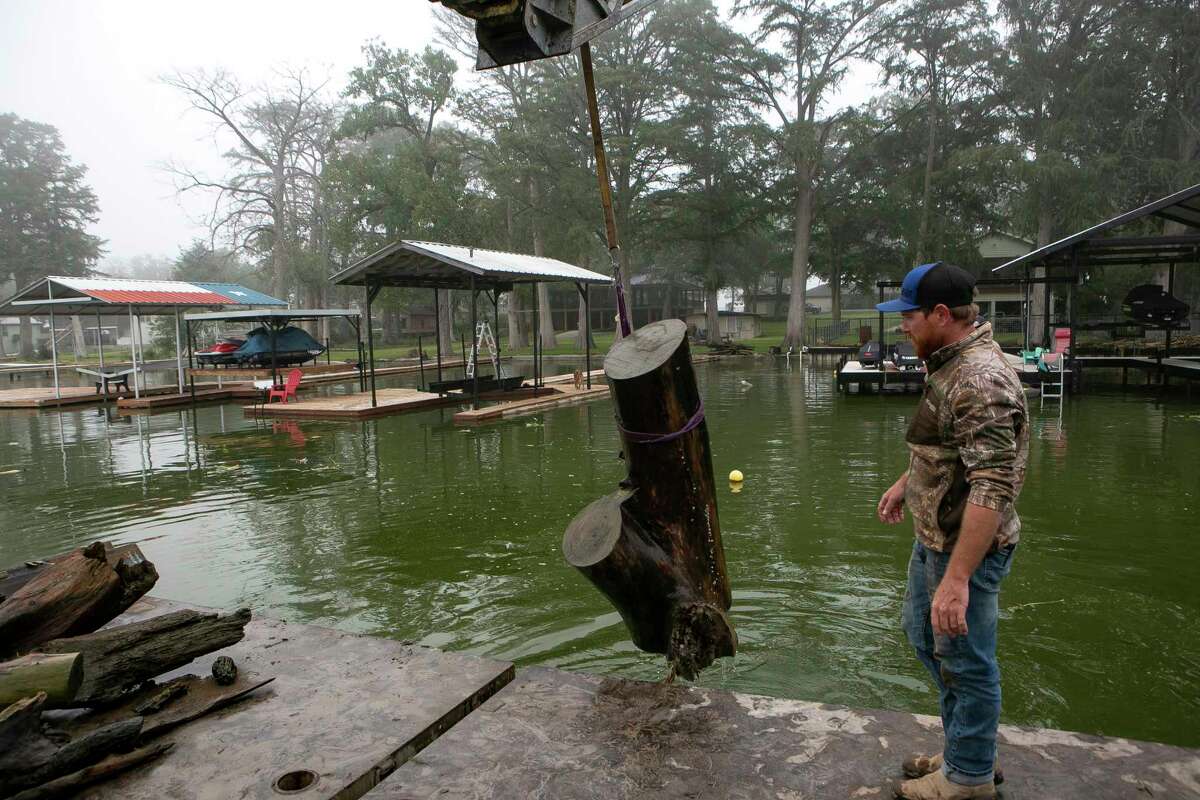
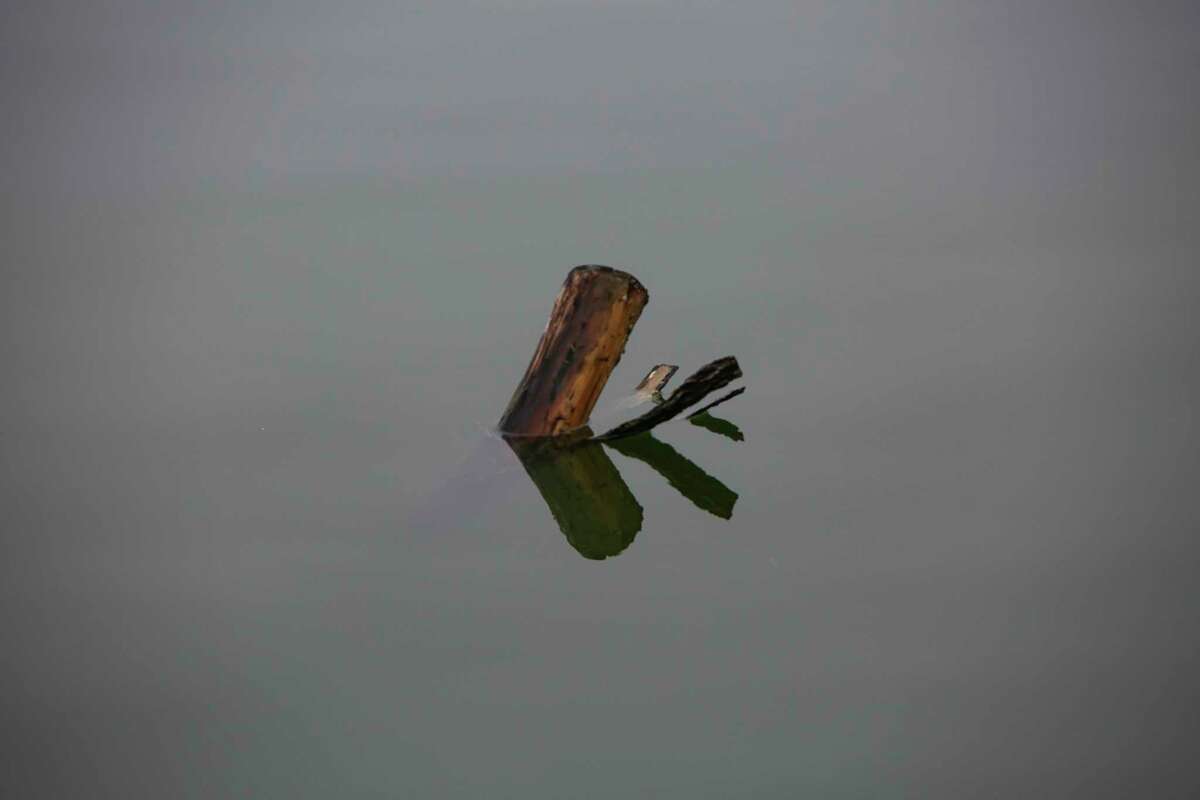
They scanned the glassy surface for logs and stumps, focusing on the largest ones that would require Bryant’s excavator to be removed. Within an hour, they’d piled more than a dozen on the barge, some wide enough to stand on and others stretching 12 feet or longer.
A handful of residents and local fisherman fanned out over the lake in their own boats, picking up smaller pieces and marking larger logs and stumps for Bryant to pick up.
Some of the logs and stumps were probably always on the bottom of the lake, Bryant said, but when the water came back, they started floating. Others flowed down the Guadalupe River, and some were likely cypress trees that died along the shoreline while the lake was dry.
That’s typical for Lake Dunlap, Harmon said. In the decades he’s spent on the lake, first visiting, then living there full time, he’s seen just about everything drift by his house, especially in times of flooding or when the river conditions change quickly.
He said he’s glad to see people out cleaning up the lake, and to see his neighbors out on the water enjoying it again.
The day the old dam failed was a shock, he said — and now, “it’s reverted to shock again,” Harmon said. “Oh my god, we’ve got a lake again.”
Sitting below a sign that reads “fairy tales do come true,” he pointed out a boat passing by near the shoreline below.
“Lake Dunlap” he said, “is back in full force.”
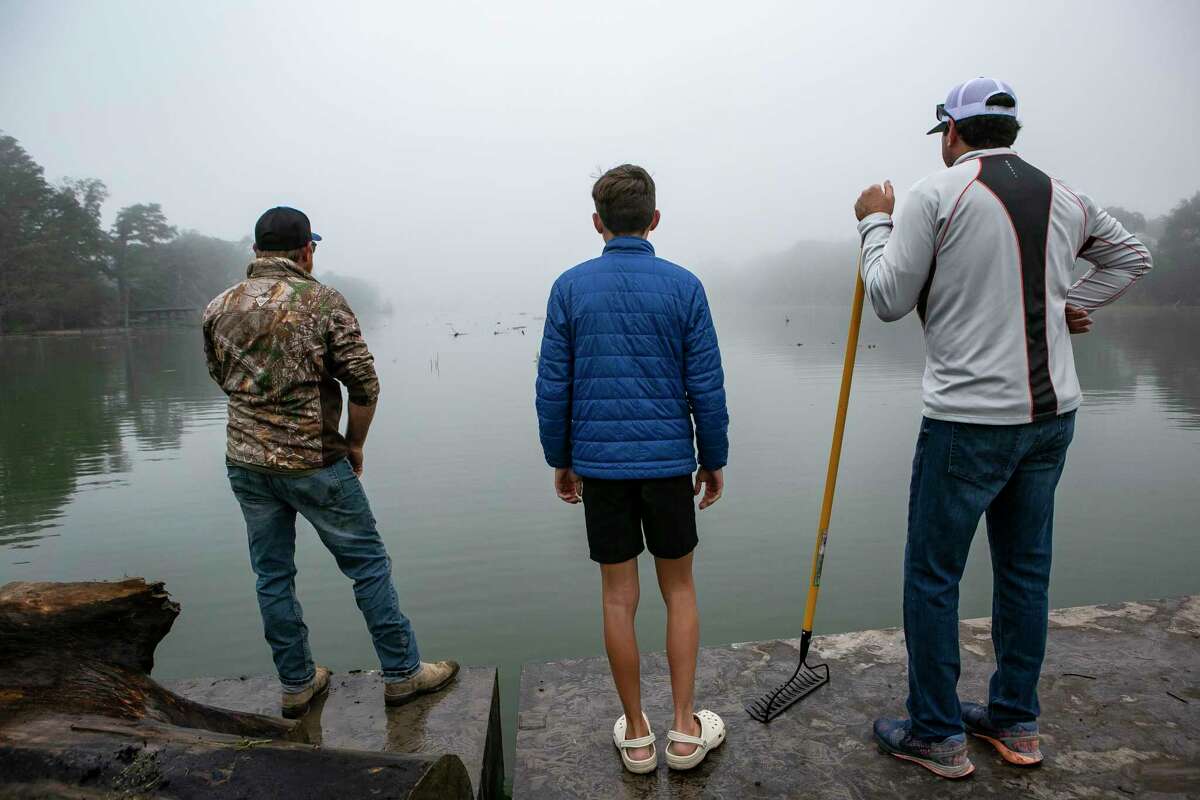
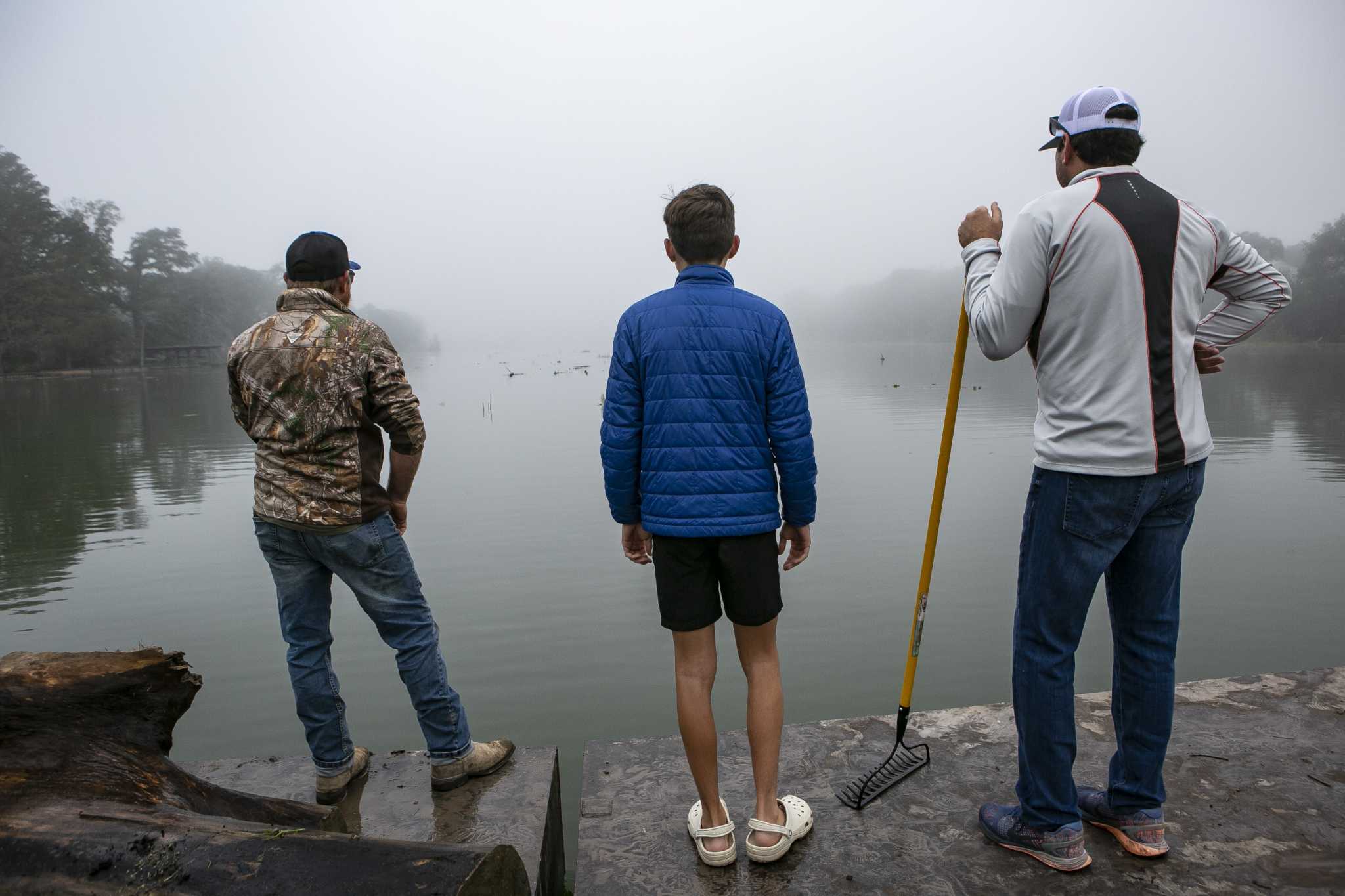
From left, Chris Cambron, Luke Bryant and Hagan Cohle keep an eye out for logs and debris in Lake Dunlap on Nov. 4.
Salgu Wissmath/San Antonio Express-NewsLead photo: NB Boat House owner Chip Bryant, left, helps Ray Moeller, right, lift a large branch onto Bryant’s barge that Moeller and his brother Harry Moeller, center, pulled from Lake Dunlap during a lake cleanup effort. Two months after refilling began at Lake Dunlap, the lake is now full and power generation is resuming. Residents have been pulling lots of logs and debris out of the lake now that it’s full.
Crédito: Link de origem

- Advertisement -

Comentários estão fechados.