
Cracking Down on Gangs and Nurturing Hope Through Community Initiatives
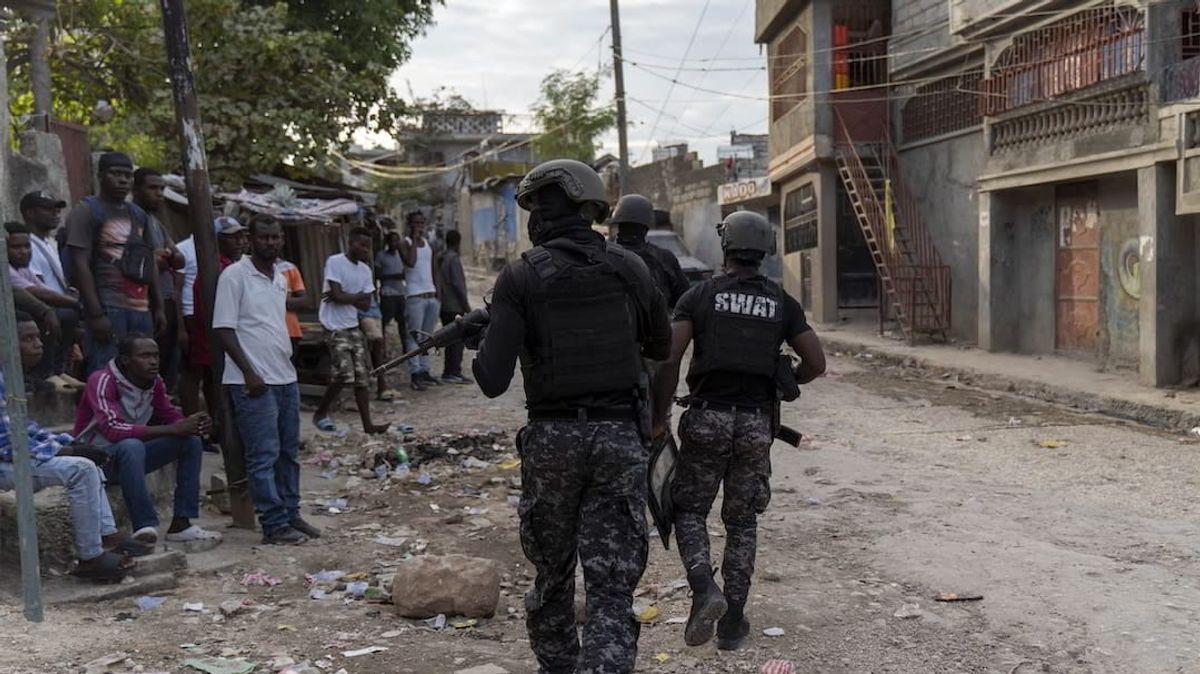

As dawn breaks over the rugged landscape of Haiti, a story of resilience and relentless challenge unfolds. Here, in a nation grappling with the unyielding grip of gang violence, a series of events encapsulate the dual nature of Haiti’s fight: a relentless pursuit to dismantle gang networks, juxtaposed against a backdrop of initiatives aimed at fostering hope and rebuilding a fractured community.
Striking at the Heart of Violence
The latest operation by Haiti’s Temporary Anti-Gang Unit (UTAG) and the Departmental Order Maintenance Unit (UDMO – West) in the Fonds Cheval area of Mirebalais is a testament to the authorities’ determination to confront gang violence head-on. This operation, a response to an armed attack on the Terre Rouge police station, resulted in the elimination of two notorious bandits. Such decisive actions highlight the ongoing struggle against the lawlessness that has long plagued the nation, echoing the concerns raised by observers like Chris Herlinger, who vividly document Haiti’s complex security and social crises.
Empowering the Vulnerable
In the midst of turbulence, rays of hope emerge through initiatives like the one spearheaded by ‘Fondasyon Ayiti Toma’, with support from UNFPA. The inauguration of a computer center aimed at the socio-professional integration of vulnerable youths, including those with disabilities, represents a beacon of progress. This effort is not just about providing skills; it’s about empowering individuals with the tools to forge a brighter future, away from the shadows of gang affiliation and violence.
Community and International Support: A Vital Lifeline
The narrative of Haiti’s current plight would be incomplete without acknowledging the roles played by both the community and international partners. The general manager of Digicel, Jean Philippe Brun, credited the support from Duchity in removing blockades, which was crucial for restoring services in Grande Anse—a lifeline for communication and business continuity in the region. Meanwhile, the Pan American Health Organization/World Health Organization (PAHO/WHO) has been instrumental in providing assistance to displaced persons camps, focusing on treatment, surveillance, vaccination, and psychological support. This comprehensive approach to healthcare underscores the importance of addressing both the physical and mental well-being of those caught in the crossfire of gang violence.
Amid these efforts, the National Union of Haitian Police Officers (SYNAPOHA) has voiced its condemnation of the police’s aggressive actions during anti-government protests, calling for a balanced approach that fosters public support for the police institution. Additionally, an anti-corruption training session, sponsored by the Embassy of Canada and UN Peace Building and conducted by UNDP and UNODC for judicial police officers, highlights the ongoing efforts to root out corruption and strengthen the rule of law.
The narrative of Haiti is one of stark contrasts—between the darkness of gang violence and the light of community resilience and international support. It’s a reminder that in the midst of adversity, the human spirit’s capacity for hope and renewal prevails. As Haiti continues its dual fight against the forces that seek to undermine its stability, the commitment of its people and their partners offers a path toward a future defined not by violence, but by the collective strength and determination to rebuild.
Crédito: Link de origem

- Advertisement -

Comentários estão fechados.